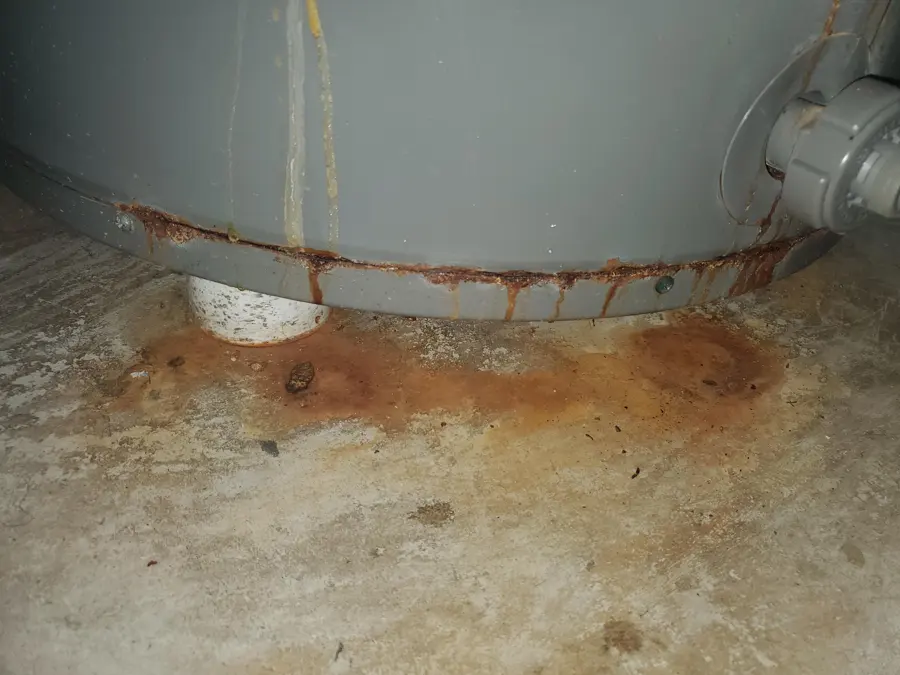
In Aliso Viejo, water heaters often sit in garages and closets, and each spot sends a leak somewhere different. A garage tank spreads water across the slab, while a closet tank pushes it into walls, flooring and sometimes the home next door.
Key takeaways
- Close the cold water valve above the tank first, then switch off the power or turn the gas control to off.
- A garage tank sends water across a concrete slab toward the door and any shared wall, while a closet tank sends it into drywall, baseboards and flooring.
- A rusted base, a damp pan or a dripping relief valve can warn of a failing tank before the flood.
- A tank that leaks from its shell is replaced, not patched, and the replacement and the cleanup are two separate jobs.
- In a townhome or condo, water from a closet tank can reach a neighboring unit, so the HOA or property manager should hear about it early.
Why the tank's location changes the damage
Slab-on-grade foundations are common in the city, and many units share walls, so the same tank failure plays out one way in a garage and another way in a hallway closet. The spot where the tank stands decides which materials get wet.
A tank in the garage
Water leaves the tank and runs across the concrete toward the garage door, floor drains and low spots. It soaks boxes, cardboard and wood shelving stored on the floor, and where the garage shares a wall with living space it can creep into the bottom of that wall.
A tank in a closet
A closet is small, so the water has nowhere to go except into the walls and the floor around it. Baseboards, drywall and the flooring in the next room soak first, and in a two-story or stacked layout water can drip into the room below.
Shut it off safely, in this order
These steps stop new water. They do not remove what is already on the floor.
Water from a failing tank can be hot enough to scald, so stay clear of the discharge and let it cool before touching wet materials. Gas and electric tanks leak the same way, but each needs its own shutoff, so the power or gas step follows the water step.
- Cold water valve: close the shutoff on the cold supply pipe above the tank. If it will not turn, close the main shutoff.
- Power or gas: switch off the breaker for an electric heater, or turn the gas control to off on a gas model.
- Wet floor: do not stand in water near outlets or the tank. Cut power at the panel only when the path to it is dry.
- Shared shutoff: in a condo or townhome the valve may be shared. Call the HOA or property manager if it cannot be found.
- Photos: take wide and close pictures of the tank, the water and the wet materials before cleanup starts.
What a failing tank shows before it floods
Tanks seldom fail without hints. A water heater leak that floods a garage can start as a slow weep that goes unnoticed for weeks.
A quick monthly look catches most of these signs. Check the floor around the base for dampness, the top fittings for a crust of corrosion and the label for the age of the tank.
- Rust: orange stains at the base, the seams or the fittings.
- Dampness: a wet or sagging pan, or a damp patch on the slab around the tank.
- Relief valve drips: water at the discharge pipe is often an early sign.
- Noises: rumbling or popping while the tank heats can point to sediment.
- Age: a tank that has run for many years is more likely to fail than a newer one.
Repair or replace: what happens to the tank itself
A leak at a connection or a relief valve can sometimes be fixed. A leak from the shell of the tank means replacement, because patching a tank does not hold.
The plumber handles the new tank and any permit or HOA rule that applies. The restoration team handles the water that is already loose, and the two jobs can run side by side.
A replacement is also the moment to swap an old shutoff valve and to ask whether a pan and drain belong under the new tank. Those two small parts decide how a future leak behaves.
What the cleanup removes and what gets dried
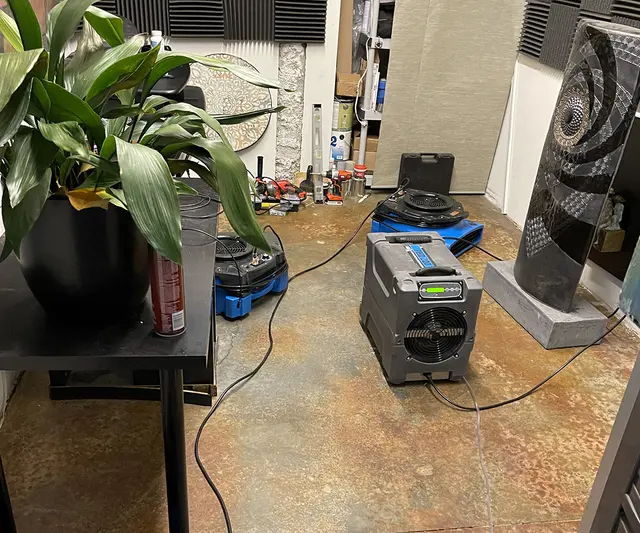
The first job is water extraction: wet vacuums pull standing water off the slab or flooring so it does not wick into the walls.
Materials that usually stay
- Concrete slab: dried in place with dehumidifiers and air movers.
- Framing and solid wood trim: dried and checked with a moisture meter.
- Cabinet boxes and tile: often dried in place when they were wet only briefly.
Materials that often go
- Wet insulation: removed because it holds water and dries slowly.
- Drywall that stayed wet: cut out at the bottom of the wall and replaced.
- Swollen baseboards and soaked cardboard: discarded.
What gets recorded
Moisture readings at each wall and floor spot are logged at every visit, and photographs show each area that was opened. Those records go into the file for the association and the insurer.
How long the equipment runs
Equipment stays until readings match a dry reference. Structural drying usually takes several days, and the slab is the slowest material to finish.
When the water reaches the next unit
In a local condo or townhome, a closet tank is rarely far from a shared wall. Water that crosses it wets the neighbor's drywall and flooring too.
Tell the neighbor and the association right away. The drying team may need to open a wall on both sides, and a washer or dishwasher beside the heater can add to the loss, as described in appliance leak water damage.
Questions to settle before the new tank goes in
A few questions at this stage prevent a second loss later.
- Permit and HOA rules: ask the plumber whether a permit applies and whether the association has rules for water heater work.
- Location: ask whether a drain pan with a drain fits the spot.
- Shutoff valve: replace one that is stiff, corroded or leaking.
- Timing: let the drying team finish opening the floor and walls before the new tank goes in.
Questions
Can a leaking water heater be repaired?
A leak at a connection or a relief valve can sometimes be fixed. A leak from the shell of the tank means replacement.
Is water from a water heater clean water?
It starts as clean supply water, Category 1. Water that sits in contact with soiled materials or stays for days can move to a higher category.
Will a flooded garage slab be ruined?
Concrete usually survives. The stored contents, the bottom of the walls and any flooring that touched the water are what need attention.
Should the tank be drained after a leak?
A plumber can drain it before removal. The first step is still closing the cold water valve and shutting off the power or gas.
How fast can a tank release its water?
A full tank holds dozens of gallons, and a failed seam can empty much of it quickly. That is why a closet floor or a garage slab can be soaked before anyone notices.
Does a gas water heater leak create a different risk?
A gas tank adds a fuel supply, so the gas control is turned to off. Anyone who smells gas should leave the area and report it to the gas utility from outside.