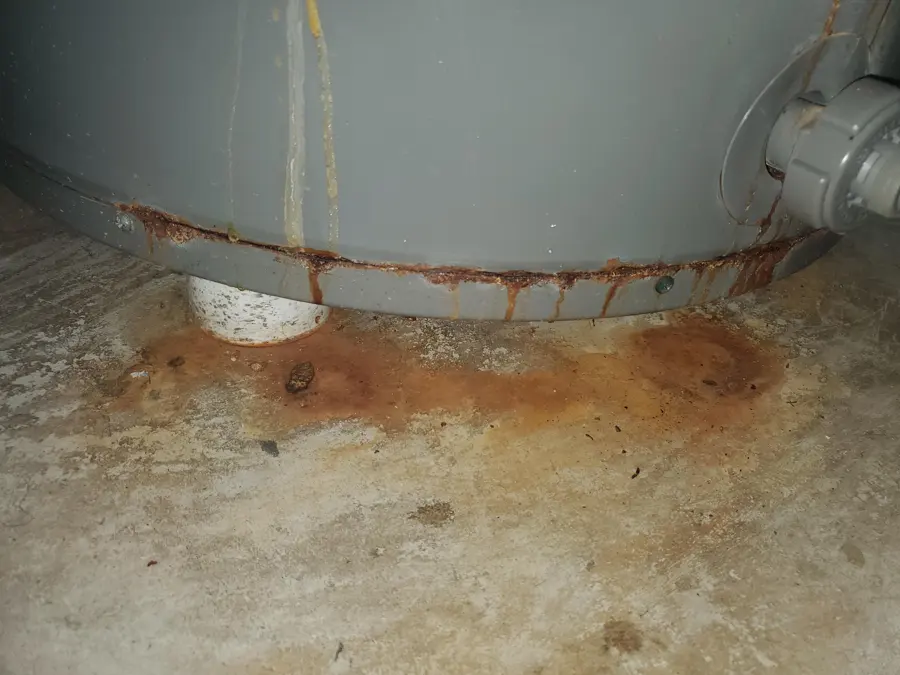
A failed water heater in an Irvine garage creates two jobs: drying the garage and any room the water reached, then replacing the tank under the city's rules. Those rules cover permits, earthquake strapping and the clear area a garage must keep for parking.
Key takeaways
- Stop the supply first: shut the cold water valve on top of the tank, then cut the electricity or set the gas control to off, before dealing with the water on the floor.
- The city lets a like-for-like residential water heater replacement in the same location be permitted through its Automated Online Permit system.
- Water heaters higher than four feet must be anchored or strapped, per State guideline or the manufacturer's instructions, to resist earthquakes.
- A water heater placed in a garage must not intrude into the clear area the city requires for vehicle parking.
- The cleanup and the replacement are separate jobs, and the drying record stays with the cleanup.
When a tank fails in a garage
A full tank can release dozens of gallons onto a garage slab in a short time. The water runs toward the garage door and the low spots, and it soaks cardboard boxes, shelves and anything else stored on the floor.
If the garage backs onto a room, water can wick into the base of the shared wall and under the interior door. In attached townhomes, which make up about 16 percent of Irvine's housing units, the association and the neighbors should hear about a tank failure early.
A tank often gives notice first: moisture at the base, a crust at the fittings, a relief valve that weeps, popping from sediment or an age label that shows the tank is near the end of its life. A failure of this kind is the loss described under water heater leak cleanup across South Orange County.
The city's Housing Element calls its housing stock generally newer than other cities in the region, with the largest growth in housing units from 2000 to 2009. Newer does not mean immune, because any tank can fail.
Shut it off safely, in order
The order matters: supply first, then power or gas, then safety around the water already on the floor.
- Supply: turn the cold water valve on the supply pipe at the top of the tank to closed. If it is stuck, close the main shutoff instead.
- Energy: flip the breaker for an electric unit, or set the gas control knob to off on a gas unit.
- Footing: stay out of standing water near outlets, and use only a dry route to reach the electrical panel.
- Cool down: hot water from the tank can scald, so give it time before touching wet items.
- Photos: capture the tank, its label with the model and age, and the water before anything moves.
What the city says about the replacement
The city's rules for water heaters are short and specific. They cover how a permit is requested, how the tank is held in place and where it may sit in a garage.
The permit route
The city lets a like-for-like residential water heater replacement in the same location be permitted through its Automated Online Permit system. Its online permit instructions also list air conditioner replacements and minor residential plumbing work, including water supply re-pipe.
Strapping
Water heaters higher than four feet must be anchored or strapped, per State guideline or the manufacturer's instructions, to resist earthquakes.
Parking clearance
A water heater placed in a garage must not intrude into the clear area the city requires for vehicle parking. A tank moved to a new spot is not a like-for-like replacement in the same location, so the installer should confirm what the city requires first.
What this summary leaves out
None of this is legal advice. The city's permit office and the installer have the current requirements, including anything about fees or processing times.
Leak repairs and new plumbing work are different things
Irvine's Permits Not Required page says no plumbing permit is needed to clear stoppages or repair leaks in pipes, valves or fixtures, or to replace water closets, sinks, garbage disposals or dishwashers, as long as no valves, pipes or fixtures are replaced or rearranged.
The same page says a concealed trap, drain, soil, waste or vent pipe that must be removed and replaced with new material counts as new work that needs a permit and an inspection.
That second rule matters after a leak, because opening a wall can reveal a damaged drain pipe, and replacing it would be new work. A homeowner should ask the plumber which category a repair falls into before work begins.
What the cleanup removes and dries
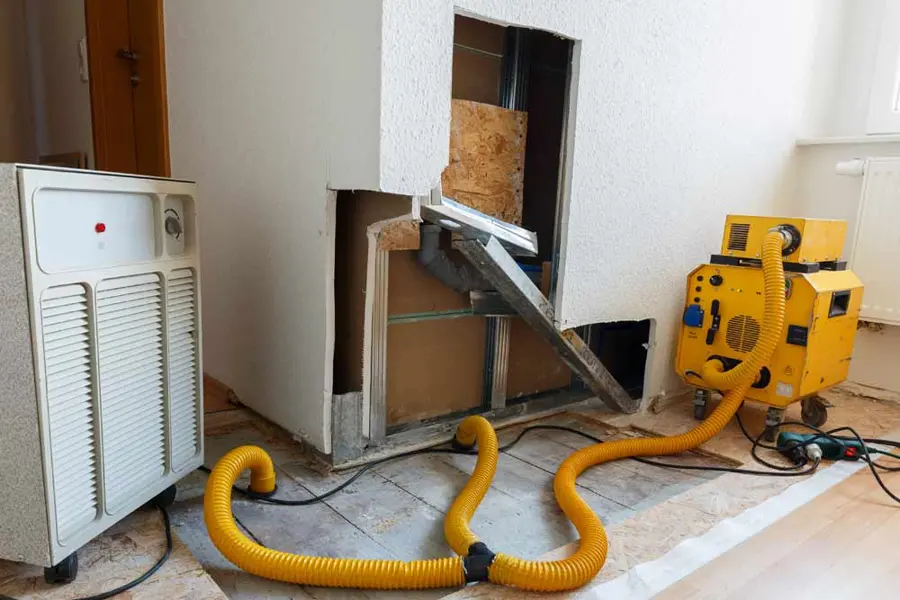
The first step in water heater leak cleanup is removing the standing water from the slab, which water extraction handles before the crew checks where the rest traveled.
- Slab and framing: dried in place with air movers and dehumidifiers.
- Garage wall drywall: cut out where it stayed wet, along with the insulation behind it.
- Baseboards and door trim: removed when swollen, dried when solid.
- Stored contents: cardboard, paper and fabric that wicked up water are usually discarded, while plastic bins and metal items are cleaned.
What to settle before a replacement tank goes in
The city's rules and the cleanup schedule fit together better when the installer and the drying team talk early. Local water damage restoration deals with the water, and the installer deals with the tank.
- Who pulls the permit: ask the installer whether the replacement will go through the Automated Online Permit system.
- Where the tank sits: the same location keeps the permit route simple, and the clear parking area stays clear.
- Strapping: confirm that a tank taller than four feet will be anchored or strapped.
- Pan: ask whether a drain pan can sit under the new tank, since it limits the damage from the next leak.
- Sequence: let the drying team finish opening floors and walls before the new tank is set.
- Haul away: ask who removes the old tank, since a tank that still holds water is heavy and awkward.
Questions
Does Irvine require a permit to replace a water heater?
A like-for-like residential replacement in the same location can be permitted through the city's Automated Online Permit system. The installer or the city's permit office can confirm what applies to a specific job.
How must a water heater be secured under the city's rules?
Water heaters higher than four feet must be anchored or strapped, per State guideline or the manufacturer's instructions, to resist earthquakes.
Can a water heater sit in the parking area of a garage?
No. A water heater placed in a garage must not intrude into the clear area the city requires for vehicle parking.
Does repairing a leaking pipe or valve need a plumbing permit?
The city's Permits Not Required page says no plumbing permit is needed to repair leaks in pipes, valves or fixtures as long as no valves, pipes or fixtures are replaced or rearranged. Replacing a concealed drain, waste or vent pipe counts as new work.
Does the drying team replace the water heater?
No. The drying team removes and dries the water damage, and a plumber or installer handles the new tank and the permit.
Is a leaking tank always a full replacement?
If the tank shell itself is leaking, the tank has to be replaced. A weeping connection or relief valve may be a smaller repair.