Slab Leak Water Damage in Mission Viejo, CA
When a supply pipe leaks under a concrete floor in Mission Viejo, the water rises into flooring and travels to wall bases. The drying team lifts what is wet, dries the slab itself and coordinates with the plumber who repairs the pipe.
(888) 450-9281Warm floor or climbing water bill?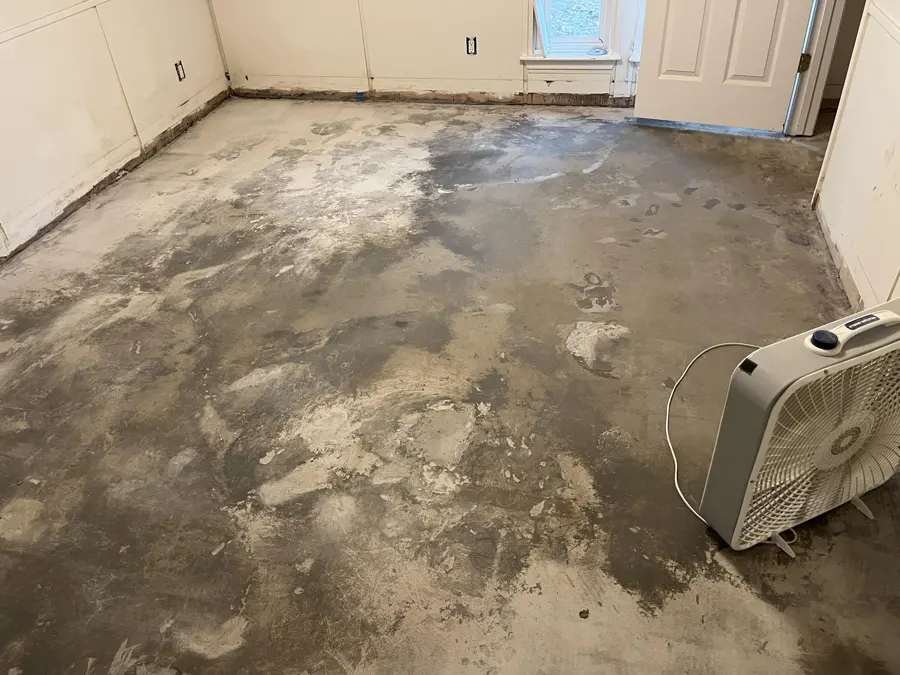
A slab leak is a supply pipe leak under or inside a concrete floor, so the water rises into flooring and creeps sideways into wall bases. Mission Viejo's hazard plan says expansive soil is not a significant issue, which leaves the plumber's leak detection, not the ground, as the way to find the cause.
What to do first about slab leak water damage in Mission Viejo
- 1
Shut off the main
Close the main water valve and check whether the meter still moves with every fixture off; movement points to a leak somewhere in the house.
- 2
Call a plumber
A plumber confirms the leak with listening gear or thermal imaging, and the drying plan waits for that diagnosis.
- 3
Document the floor
Photograph warm or damp spots and any lifted flooring, and note the date the bill or the floor first changed.
- 4
Keep flooring in place
Carpet, planks and tile stay put until readings show which pieces can dry and which must come up.
What does slab leak water damage cost in Mission Viejo, CA?
Slab leak water damage in Mission Viejo usually runs $2,000 to $18,000. A leak caught early in one room costs the least, while long-running leaks with large slab areas and extended drying cost the most.
One room, found early
$2,000 to $4,000
- Wet pad or planks lifted
- Slab and wall bases dried
- Readings each day
Several rooms, floors out
$4,000 to $9,000
- Moisture mapped by room
- Desiccant or LGR drying
- Baseboards pulled
Long-running leak
$9,000 to $18,000
- Large slab area dried
- Toe kicks opened
- Extended equipment time
These are typical ranges, not a quote. The water category, the wet square footage, the material class and how soon drying began move the final number most. The water damage cost calculator narrows it for your home.
How slab leak water damage gets done in Mission Viejo
The walkthrough starts with a moisture map, so the drying plan follows what the meters find, not what the surface shows. The drying team pulls equipment only after the readings reach the dry standard.
- 01
Map the slab
Meters and a thermal camera trace the wet path across the floor and up the wall bases, showing where the water traveled.
- 02
Open the wet path
Flooring comes up along that path, baseboards come off and toe kicks are opened so the concrete edge is exposed to air.
- 03
Pull water from concrete
Desiccant or LGR dehumidifiers run with air movers or floor mats while the plumber's repair keeps new water out.
- 04
Prove the slab is dry
Readings repeat on the slab, walls and subfloor each visit, and equipment leaves only when every point hits target.
Slab leak water damage in Mission Viejo houses
Slab construction is not confirmed for Mission Viejo as a whole, so the walkthrough settles whether a particular home sits on one. About 94.2 percent of the city's homes date from 1960 to 1999, which is decades of use on any supply pipe.
Typical signs are warm patches on the floor, a meter that keeps turning with every fixture off, the sound of running water and flooring that cups or lifts. The hidden leak risk check can help sort out whether those signs point to a slab leak.
What slab leak water damage cleanup involves
- Flooring lifted along the wet path so the slab can release moisture
- Baseboards removed and toe kicks opened to dry the wall base
- Desiccant or LGR dehumidifiers pulling water out of the concrete
- Daily readings on slab, walls and subfloor until each hits target
Coordinating slab leak repair with drying
A plumber finds and repairs the pipe, and the drying team's readings show how far the water traveled. The restoration crew does not cut into concrete; its work is the moisture the leak left behind. Drying starts once the pipe is fixed, so new water is not added to a wet floor.
Concrete releases water slowly, so a slab often takes longer to dry than carpet or drywall, and the scope can grow as readings come back. See structural drying for the equipment side.
Slab leak water damage across Mission Viejo and nearby towns
Slab leak work reaches ZIP codes 92691 and 92692, including El Dorado, Califia and Canyon Crest, plus homes along the Alicia Parkway and Oso Parkway corridors and the streets between them.
The same service nearby: slab leak water damage in Aliso Viejo, Lake Forest, Laguna Woods.
Water damage restoration in Mission Viejo · every town covered
Related water damage services in Mission Viejo
Questions about slab leak water damage in Mission Viejo, CA
How is a slab leak found?
A plumber uses listening gear, thermal imaging or pressure tests to find the leak. The restoration team uses a moisture meter on floors and wall bases to show how far the water traveled.
Does flooring have to come up?
Usually along the wet path. Carpet and pad lift, planks or tile are checked with readings, and boards that cannot dry are removed so the slab can release water.
How long does a slab take to dry?
Concrete releases water slowly, so slab drying often runs longer than carpet or drywall. Desiccant or LGR equipment stays until daily readings reach the target.
Will a slab leak cause mold?
Damp flooring and wall bases that stay wet can grow mold, which is why drying and daily readings begin early and continue until the surfaces are dry.
Does insurance pay for a slab leak?
Policies differ widely, and some treat the pipe repair and the resulting water damage separately, so the insurer decides what applies. The restoration team documents the damage either way.
Who repairs the pipe?
A plumber repairs the pipe. The restoration team handles extraction, drying and cleanup, and coordinates timing so drying equipment is not set before the leak is fixed.
Concrete holds water longer than it looks
The drying team lifts the wet flooring, dries the slab and logs every reading for the plumber and the insurer.
Aliso Viejo, CA · Orange County · open 24/7