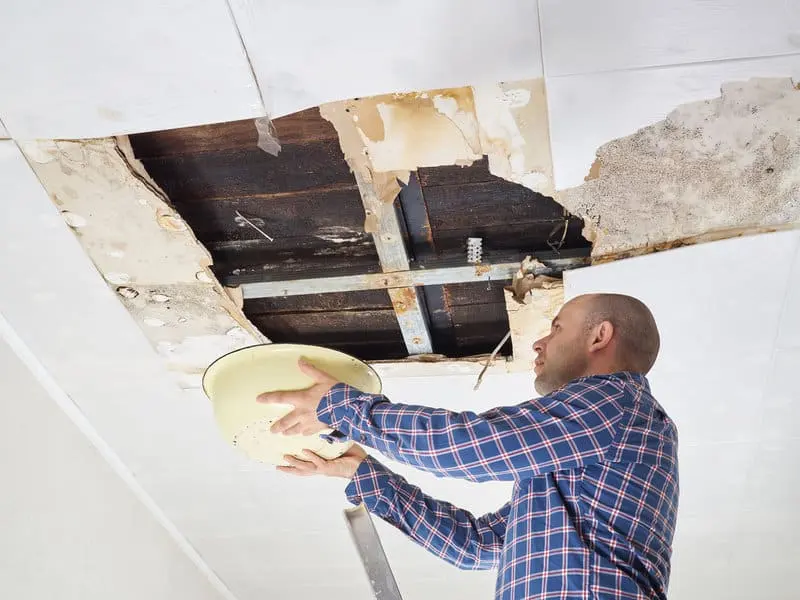
A leak in a gated community of three housing mutuals raises a question before any water is cleaned up: whose pipe, whose wall, whose floor? In Laguna Woods Village, that depends on whether the home belongs to Third, United or The Towers.
Key takeaways
- Report a leak to the mutual right away, then protect belongings and photograph the damage.
- Third Mutual is condominium housing, United Mutual is a stock cooperative and The Towers is self-managed, so ownership rules differ.
- Published articles give different ownership statements for Third and United, so no single rule applies across the Village.
- The Village's own maintenance categories include in-wall supply pipe leaks, in-wall drain pipe leaks, toilet base leaks, leaks under a slab and rain leaks through the roof membrane.
- About 71 percent of homes in the city are in buildings of 2 or more units, so drying often has to reach neighboring homes.
Three mutuals, three sets of rules
Nearly all housing in Laguna Woods is age-restricted to adults 55 and older. The Village is a gated community of three housing mutuals: Third Laguna Hills Mutual, United Laguna Woods Mutual and Mutual No. Fifty, also written Mutual 50 and commonly called The Towers.
Golden Rain Foundation of Laguna Woods looks after shared amenities such as clubhouses, swimming pools, golf courses, security and the Equestrian Center. Village Management Services is the managing agent for Third, United and the Foundation.
Third Mutual
Third is condominium housing with 6,102 memberships. It operates and maintains its buildings, laundry rooms, carports and grounds.
United Mutual
United is a stock cooperative with 6,323 memberships. A corporation owns the real property, and each member holds an occupancy agreement for a specific unit.
The Towers
The Towers has two 14-story buildings with 311 condominiums. It is self-managed and is not run by Village Management Services.
Who to tell first
The first move after a leak is a report to the mutual. The maintenance and construction department of Village Management Services provides planned and emergency maintenance for United and Third, and a resident of The Towers should confirm who takes leak reports there, since that building manages itself.
A leak between homes falls under condo water damage, and a clear report speeds everything that follows. These details cover what a mutual needs:
- Where: the building, the unit and the room, plus the spot on the ceiling or wall.
- When: the date and time the water was first noticed.
- What: whether the water looks clear, stained or foul, and whether it is still flowing.
- Photos: wide and close pictures taken before anything is moved.
- Ask: what the mutual needs from the resident before work begins.
The Village's own leak categories
The Village's maintenance request list sorts water problems into moisture intrusion categories. They show the kinds of leaks the buildings track, and each one points the drying team toward a different place to look.
- In-wall supply pipe: a pressurized pipe inside a wall leaks, often with little visible water at first.
- In-wall drain pipe: a drain inside a wall leaks, usually when a tub, sink or washer empties.
- Toilet base: water seeps at the base of a toilet and wets the flooring and the ceiling below.
- Under a slab: a leak below the concrete appears as damp flooring, wet baseboards or a warm spot.
- Several fixtures at once: a stoppage backs up more than one fixture, which points to a shared drain.
- Rain through the roof membrane: water enters from above and appears as a ceiling stain.
What the published ownership statements say
A June 2019 Village Breeze article about Third Mutual said a condominium owner owns the unit interior from the paint in, including floor coverings, cabinets, appliances and water heaters. After moisture intrusion, the article said, Third repairs what it owns while the resident pays to repair what the resident owns.
The November and December 2024 issue of the Village Breeze said United operates and maintains the manors, laundry rooms, carports and common grounds, and also owns the unaltered interior manor fixtures, including appliances.
Those statements describe their own mutuals at the time they were published, and policies may have changed. Neither covers The Towers, and no single rule fits the whole Village, so the sensible step is to ask the mutual for its current rule in writing before repairs begin.
How drying works in a shared-wall building
About 71 percent of the city's homes, roughly 9,400, are in buildings of 2 or more units. That includes 3,713 homes in buildings of 5 to 9 units and 1,009 in buildings of 50 or more units.
The first residents moved in during 1964, and the Census Bureau's American Community Survey for 2020 to 2024 puts the median year homes were built at 1969. Water in buildings that age follows shared walls, floors and ceilings, so drying often has to reach neighboring homes and common areas.
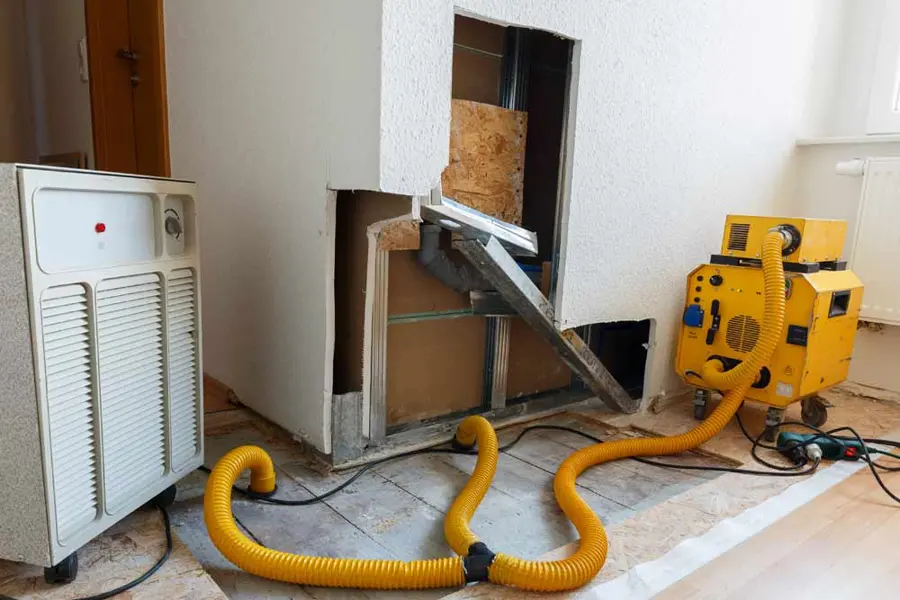
The restoration team maps moisture before setting equipment, keeps readings for each home and works with the mutual on access. The same approach applies in any shared-wall property, as described under condo water damage.
Rebuilding after the dry-out
Rebuilding is a separate step from drying. The Village's alterations quick reference, dated February 27, 2025, says the city's building permit office requires a permit for alterations such as electrical work, plumbing and cutting into drywall.
The same document lists plumbing and water heater relocation among the alterations that need mutual consent from Manor Alterations, and the Village's alteration standards include Standard 11A for interior hard-surface flooring.
A resident who plans to replace flooring or move a fixture after a leak should ask the mutual how those rules apply before ordering materials. Whether an emergency opening of a wall falls under the same rules is also a question for the mutual.
A resident checklist after a leak
For a wet wall or floor, water damage restoration runs 24/7. These steps help whichever mutual is involved:
- Report: tell the mutual with the details above, and note the time of the report.
- Protect: lift rugs, electronics and papers off wet floors and keep walkways dry.
- Photograph: take dated pictures of the source, the stain and every damaged item.
- Ask in writing: which repairs the mutual handles and which belong to the resident.
- Keep records: save messages, receipts and the drying log in one folder.
Questions
Who pays for water damage in Laguna Woods Village?
No single rule applies across the Village. Third and United published different ownership statements, and The Towers is self-managed. A resident should ask the mutual for its current rule in writing.
Does The Towers follow the same process as Third and United?
The Towers is self-managed and is not run by Village Management Services. A resident there should confirm with The Towers' own management who takes leak reports.
What counts as moisture intrusion in the Village?
The Village's maintenance list includes plumbing leaks in a wall supply pipe or a wall drain pipe, at a toilet base and under a slab, several fixtures stopping up at once and rain leaks through the roof membrane.
Can a leak in one home reach the home next door?
Yes. About 71 percent of homes are in buildings of 2 or more units, and water follows shared walls, floors and ceilings, so drying can reach neighbors and common areas.
Who handles emergency maintenance in the Village?
The maintenance and construction department of Village Management Services provides planned and emergency maintenance for United and Third and for Golden Rain Foundation facilities.