Structural Drying and Dehumidification in Laguna Woods, CA
Most Laguna Woods homes share walls, floors and ceilings with neighbors, so drying rarely stops at one front door. The drying team places air movers and dehumidifiers by moisture readings and follows the wet materials into the next room or unit.
(888) 450-9281Damp walls and floors in Laguna Woods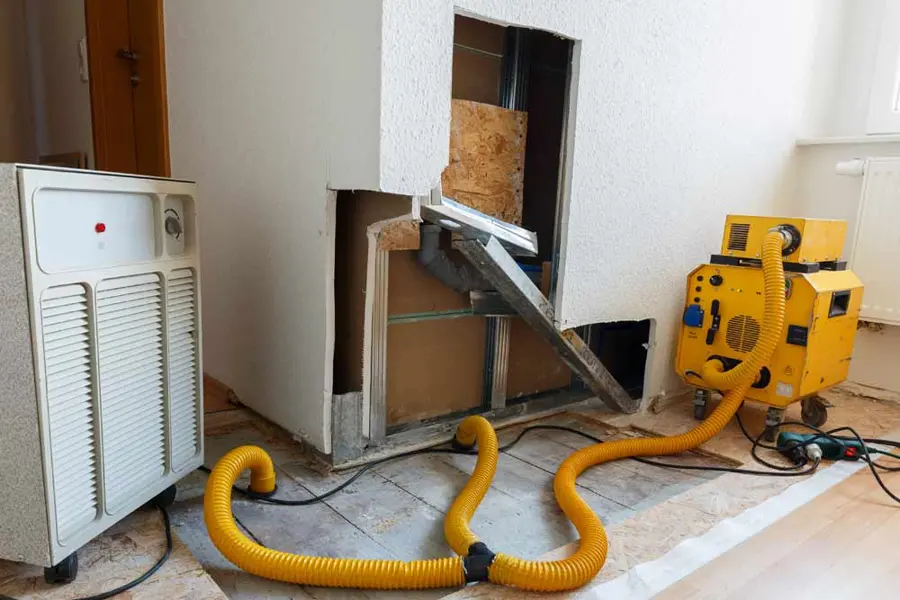
Drying a wet home is physics, not guesswork: evaporation needs warm, moving air and a place for the moisture to go. Because most Laguna Woods homes share walls, floors and ceilings in multi-unit or attached buildings, the wet area often continues into a neighbor's unit or a common area, and the drying has to follow it.
What to do first about structural drying and dehumidification in Laguna Woods
- 1
Let the crew read first
Equipment goes where meters, thermal images and humidity readings point, not where damage looks worst.
- 2
Keep doors and windows shut
Closed rooms let dehumidifiers work on wet air instead of the whole building, so keep the zone sealed.
- 3
Leave equipment running
Equipment is placed by readings, so unplugging or moving a unit breaks the drying plan.
- 4
Allow access for readings
Daily visits need access to each wet room, and a neighbor's unit may need readings too when walls are shared.
What does structural drying and dehumidification cost in Laguna Woods, CA?
Structural drying and dehumidification in Laguna Woods typically costs $1,200 to $15,000. Class 1 and 2 jobs in a few rooms cost the least, while Class 4 wood, plaster or slab costs the most.
Light loss, a few rooms
$1,200 to $3,500
- Air movers placed by readings
- LGR dehumidifier running
- Short monitoring period
Heavier wall and ceiling loss
$3,500 to $8,000
- Cavity drying through openings
- Extra units in each room
- Temperature and humidity logs
Dense wood, plaster or slab
$6,000 to $15,000
- Desiccant units on site
- Mats under wet boards
- Longer monitoring period
These are typical ranges, not a quote. The water category, the wet square footage, the material class and how soon drying began move the final number most. The water damage cost calculator narrows it for your home.
How structural drying and dehumidification gets done in Laguna Woods
The walkthrough starts with a moisture map, so the drying plan follows what the meters find, not what the surface shows. The drying team pulls equipment only after the readings reach the dry standard.
- 01
Set the dry reference
Temperature, humidity and moisture are logged in wet rooms and a dry reference room.
- 02
Size and set equipment
Air movers sweep walls and floors, and dehumidifiers are sized to each room's wet load.
- 03
Read and adjust
Each visit repeats readings, and equipment is moved, added or removed to match the materials.
- 04
Confirm and pull out
Equipment leaves only when materials match dry reference readings.
Structural drying across shared walls and floors
The tech who does the walkthrough logs temperature and humidity along with material moisture, because the air and the materials have to be read together. Those psychrometric readings set how many air movers and dehumidifiers each room needs, and they are repeated at every visit.
When a wall is shared, equipment goes on both sides when the neighbor allows it, and each home's readings are logged separately so one unit's progress is not mistaken for the other's.
What structural drying and dehumidification includes
- Air movers placed to sweep walls and floors
- LGR dehumidifiers for typical wet rooms
- Desiccant units for dense or very wet materials
- Wall cavity drying through small openings
Structural drying classes and what they mean
IICRC S500 sorts water losses into four classes by how much moisture materials absorb and how fast it can leave. Class 1 and 2 losses are usually a few rooms of drywall and carpet, Class 3 involves walls and ceilings, and Class 4 covers dense wood, plaster and concrete that need desiccant dehumidifiers and longer monitoring.
Equipment stays only as long as readings require, and the drying time estimator gives a first idea before a crew measures. Pumping comes first, under water extraction.
Structural drying and dehumidification across Laguna Woods and nearby towns
Structural drying covers ZIP 92637, from attached homes and multi-unit buildings in Laguna Woods Village, including Third, United and The Towers, to commercial space along El Toro Road.
The same service nearby: structural drying and dehumidification in Aliso Viejo, Mission Viejo, Lake Forest.
Water damage restoration in Laguna Woods · every town covered
Related water damage services in Laguna Woods
Questions about structural drying and dehumidification in Laguna Woods, CA
Why does drying take several days?
Water sits inside materials, not just on them, and it leaves slowly. Air movers and dehumidifiers pull it out at a controlled pace, and readings show when the materials are actually dry.
Are LGR and desiccant dehumidifiers different?
Yes. LGR units suit typical wet rooms, while desiccant units work better in cooler spaces or on dense materials like wood, plaster and concrete.
Will drying reach the neighbor's unit?
When water crossed a shared wall or ceiling, yes. Both homes are read, and each gets its own equipment and logs so the drying records stay separate.
Why keep windows and doors closed?
A sealed room lets the dehumidifier remove moisture from the wet air only. Open doors bring humid outside air back in and slow the dry-down.
How do readings prove a wall is dry?
A wall is dry when its moisture matches the reading of the same material in an unaffected room. Final readings and photos go into the claim file.
Dry to readings, not to a calendar
The drying team sets equipment by measured moisture, adjusts it at every visit and pulls it only when materials match dry readings.
Aliso Viejo, CA · Orange County · open 24/7