Structural Drying in Laguna Niguel, CA
Drying a wet building is a measured process, not a row of fans. The drying team sets dehumidifiers and air movers by room size, follows the readings every visit, and removes the equipment only when the materials reach dry targets.
(888) 450-9281Plan the Laguna Niguel dry-out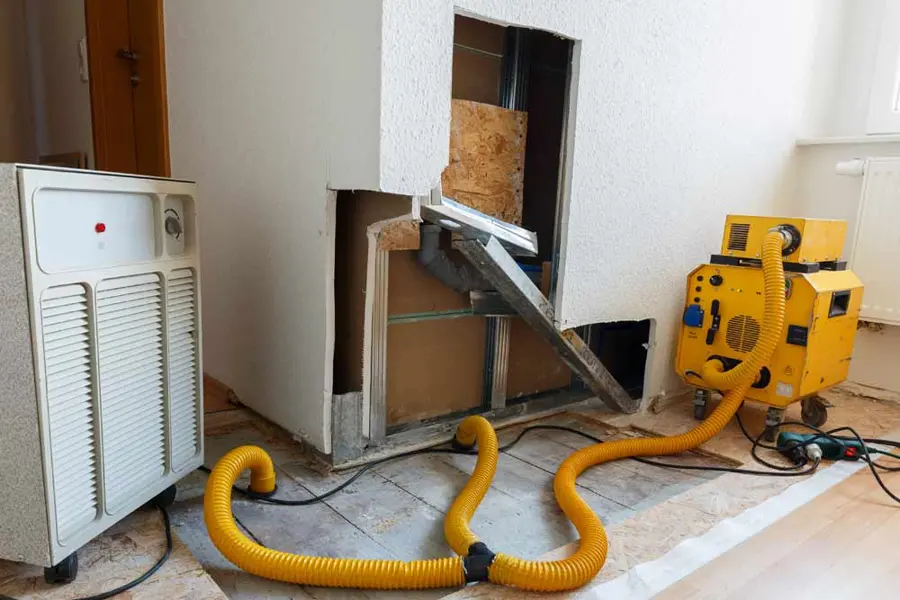
Water damage does not end when the standing water is gone, because wet drywall, framing and flooring keep releasing moisture into the air. In attached Laguna Niguel buildings, drying often has to reach shared walls and floors, so equipment is planned around the whole wet area.
What to do first about structural drying and dehumidification in Laguna Niguel
- 1
Remove standing water
Pooled water must come out first, because drying equipment works on moisture left in materials, not on puddles.
- 2
Open the space up
Open closet and cabinet doors, lift wet rugs and move furniture so air can reach the walls and floor.
- 3
Leave the equipment alone
Once machines are running, keep them plugged in and in place, because their position follows the readings.
- 4
Keep the readings
Let the team record each visit and keep the log, which proves the structure reached dry targets.
What does structural drying and dehumidification cost in Laguna Niguel, CA?
Structural drying in Laguna Niguel typically runs $1,200 to $3,500 for Class 1 or 2 losses and $6,000 to $15,000 for Class 4 materials. Class, rooms and equipment days drive the cost.
Class 1 or 2, a few rooms
$1,200 to $3,500
- Air movers and LGR units
- Daily readings logged
- Three to four days
Class 3, walls and ceilings
$3,500 to $8,000
- Cavity drying with injectors
- More equipment per room
- Psychrometric logs kept
Class 4, dense wood or plaster
$6,000 to $15,000
- Desiccant dehumidifiers running
- Floor drying mats placed
- Extended monitoring visits
These are typical ranges, not a quote. The water category, the wet square footage, the material class and how soon drying began move the final number most. The water damage cost calculator narrows it for your home.
How structural drying and dehumidification gets done in Laguna Niguel
The walkthrough starts with a moisture map, so the drying plan follows what the meters find, not what the surface shows. The drying team pulls equipment only after the readings reach the dry standard.
- 01
Classify the loss
Readings and a room walk place the damage in Class 1 through 4, which sets equipment type and count.
- 02
Place the equipment
Air movers, dehumidifiers and mats go in room by room, sized to the wet space.
- 03
Monitor every visit
Temperature, humidity and material readings are logged, and equipment moves when numbers stall.
- 04
Confirm dry and remove
Once materials match dry targets, equipment comes out and the full log goes to the claim file.
How structural drying works room by room
Air movers push moving air across wet surfaces so water leaves the material, and LGR dehumidifiers pull that water out of the air and drain it away. The balance matters, because too little dehumidification leaves moisture hanging in the room.
Each visit, the team records temperature, humidity and grains of moisture in the air alongside material readings, then moves or adds equipment based on what the numbers show.
What structural drying equipment does
- LGR dehumidifiers: remove moisture from air in rooms with normal wet materials
- Desiccant dehumidifiers: handle dense materials and low humidity conditions
- Air movers: speed evaporation from floors, walls and ceilings
- Drying mats and injectors: pull moisture out of wood floors and wall cavities
Structural drying classes and how long drying takes
Class 1 and 2 losses involve little to moderate absorption in a limited area, Class 3 means water came from above and soaked ceilings and walls, and Class 4 covers dense materials such as hardwood and plaster that hold moisture deeply. Higher classes need more equipment and longer monitoring.
The drying time estimator gives a rough range for a typical loss, and readings, not the calendar, decide when equipment leaves. Wood floors get their own treatment under hardwood floor water damage.
Structural drying and dehumidification across Laguna Niguel and nearby towns
Structural drying covers Laguna Niguel in ZIP codes 92677 and 92607, including Beacon Hill, Rancho Niguel, Niguel Summit, Laguna Heights, Quissett Bay, Monarch Point and the buildings along Crown Valley Parkway.
The same service nearby: structural drying and dehumidification in Aliso Viejo, Laguna Woods, Mission Viejo.
Water damage restoration in Laguna Niguel · every town covered
Related water damage services in Laguna Niguel
Questions about structural drying and dehumidification in Laguna Niguel, CA
How is drying progress measured?
Meters read moisture in drywall, wood and framing, while a hygrometer records temperature and humidity in the air. The team compares those numbers with dry reference readings from unaffected materials.
Why do the dehumidifiers run so long?
Materials release moisture slowly, and the air has to be kept dry enough for that moisture to keep leaving. Stopping early can leave wet framing behind walls that look dry.
Can fans alone dry a flooded wall?
Fans move air across the surface, but without dehumidifiers the moisture simply returns to the room. Cavities usually need controlled airflow and dry air together.
When does desiccant drying make sense?
Dense materials like hardwood and plaster, and cooler or low humidity conditions, respond better to desiccant dehumidifiers. They also appear on larger or deeper losses.
How is drying different in attached homes?
Water often crosses shared walls and floors, so readings are taken on both sides of them. Equipment may be needed in more than one unit before the structure is dry.
Put the dry-out on a measured schedule
Drying that follows the numbers finishes cleaner. The restoration team places equipment, tracks each reading and removes it only at dry targets.
Aliso Viejo, CA · Orange County · open 24/7