Structural Drying and Dehumidification in Lake Forest, CA
Drying a building means more than running fans. The restoration team sizes air movers, LGR dehumidifiers and desiccant units to the room and the class of loss, then logs temperature, humidity and moisture readings until every material reaches its dry goal.
(888) 450-9281Set up the Lake Forest dry-out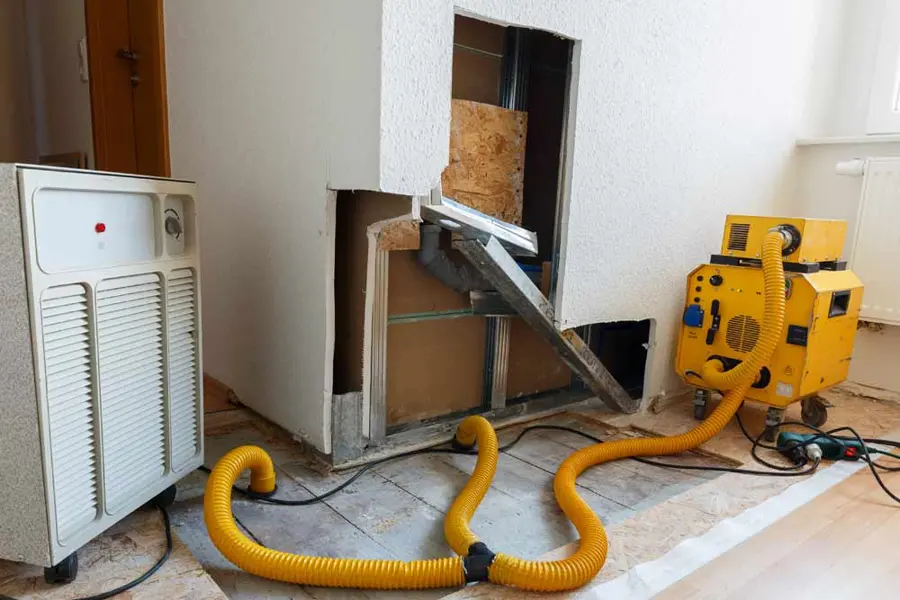
Water that is extracted but not dried keeps damaging a building, which is why structural drying is its own phase of the job. In attached Lake Forest homes the drying often has to reach shared walls and floors, and the readings set each step.
What to do first about structural drying and dehumidification in Lake Forest
- 1
Keep the equipment running
Leave air movers and dehumidifiers on and in place, because an unplugged unit stops the drying.
- 2
Keep doors and windows shut
Closed doors and windows in the drying area keep humid outside air from undoing the work.
- 3
Keep the temperature steady
Warmth helps moisture leave materials, so keep the home comfortably warm while the equipment runs.
- 4
Let readings decide
Do not remove equipment because a surface feels dry, since a wall can hold water only a meter would find.
What does structural drying and dehumidification cost in Lake Forest, CA?
Structural drying in Lake Forest runs from $1,200 to $3,500 for a few Class 1 or 2 rooms up to $15,000 for Class 4 materials, with equipment and monitoring days setting the figure.
A few light rooms
$1,200 to $3,500
- Air movers and LGR units
- Daily readings logged
- Three to four days
Walls and ceilings wet
$3,500 to $8,000
- Cavity drying systems
- More equipment per room
- Psychrometric logs kept
Wood, plaster or concrete
$6,000 to $15,000
- Desiccant dehumidifiers
- Floor drying mats
- Extended monitoring period
These are typical ranges, not a quote. The water category, the wet square footage, the material class and how soon drying began move the final number most. The water damage cost calculator narrows it for your home.
How structural drying and dehumidification gets done in Lake Forest
The walkthrough starts with a moisture map, so the drying plan follows what the meters find, not what the surface shows. The drying team pulls equipment only after the readings reach the dry standard.
- 01
Map the moisture
Meters and a thermal camera mark every wet surface so equipment goes where the water actually is.
- 02
Classify and size
Class of loss and room volume set the number of air movers and dehumidifiers under the S500.
- 03
Monitor daily
Each visit records temperature, humidity and moisture readings, and equipment is moved or added when a section stalls.
- 04
Release when dry
Equipment comes out only when every material meets its dry goal, and the final log joins the file.
How structural drying and dehumidification works
Wet materials release moisture into the air, and a dehumidifier removes it so more can leave the wood, drywall and concrete. Air movers keep dry air passing over wet surfaces, and LGR units are the usual choice for pulling water from the air.
Dense or cold materials such as hardwood, plaster and concrete dry slowly, so desiccant dehumidifiers and floor drying mats are added when readings stall.
What structural drying and dehumidification includes
- Moisture mapping with meters and a thermal camera before equipment is placed
- Air movers and dehumidifiers sized to room volume and class of loss
- Daily temperature, humidity and moisture readings recorded in a log
- Equipment adjusted or removed as each material reaches its dry goal
Structural drying and dehumidification in attached homes
In a townhome or condo, a wall that is wet on one side is usually wet on the other, so the drying plan covers both units and the readings are kept apart for each owner. The drying time estimator shows how class and area change the length.
Water still standing in the building belongs to water extraction first, since drying equipment should never be asked to remove puddles.
Structural drying and dehumidification across Lake Forest and nearby towns
Structural drying covers homes, condos and offices across Lake Forest, including Foothill Ranch, Portola Hills, Baker Ranch, Hidden Lakes and Glenwood, in ZIP codes 92630, 92610, 92679 and 92609.
The same service nearby: structural drying and dehumidification in Aliso Viejo, Mission Viejo, Laguna Woods.
Water damage restoration in Lake Forest · every town covered
Related water damage services in Lake Forest
Questions about structural drying and dehumidification in Lake Forest, CA
Why not just run fans to dry a wet room?
Fans move air but do not remove moisture from it, so humidity stays high and water re-condenses on cool surfaces. Dehumidifiers take the water out.
How loud and how long does the equipment run?
Equipment is noticeable, since air movers and dehumidifiers run around the clock. Most light losses finish in three to four days, and the daily readings decide when each unit leaves.
What do Class 1 to 4 mean in drying?
The class describes how much water was absorbed: Class 1 and 2 are lighter losses, Class 3 means soaked walls and ceilings, and Class 4 covers dense materials like wood, plaster and concrete.
How does the team know when a wall is dry?
A moisture meter reads the wall against a dry reference, and the readings are logged each day. When every point reaches its dry goal, the equipment is removed.
Does drying equipment raise the electric bill?
Yes, several machines running for days use real power, and the equipment count and days are documented so the owner can raise it with the insurer.
Dry every layer, then prove it
The restoration team places equipment from the moisture map, logs readings daily and removes it only when each wet material reaches its dry goal.
Aliso Viejo, CA · Orange County · open 24/7